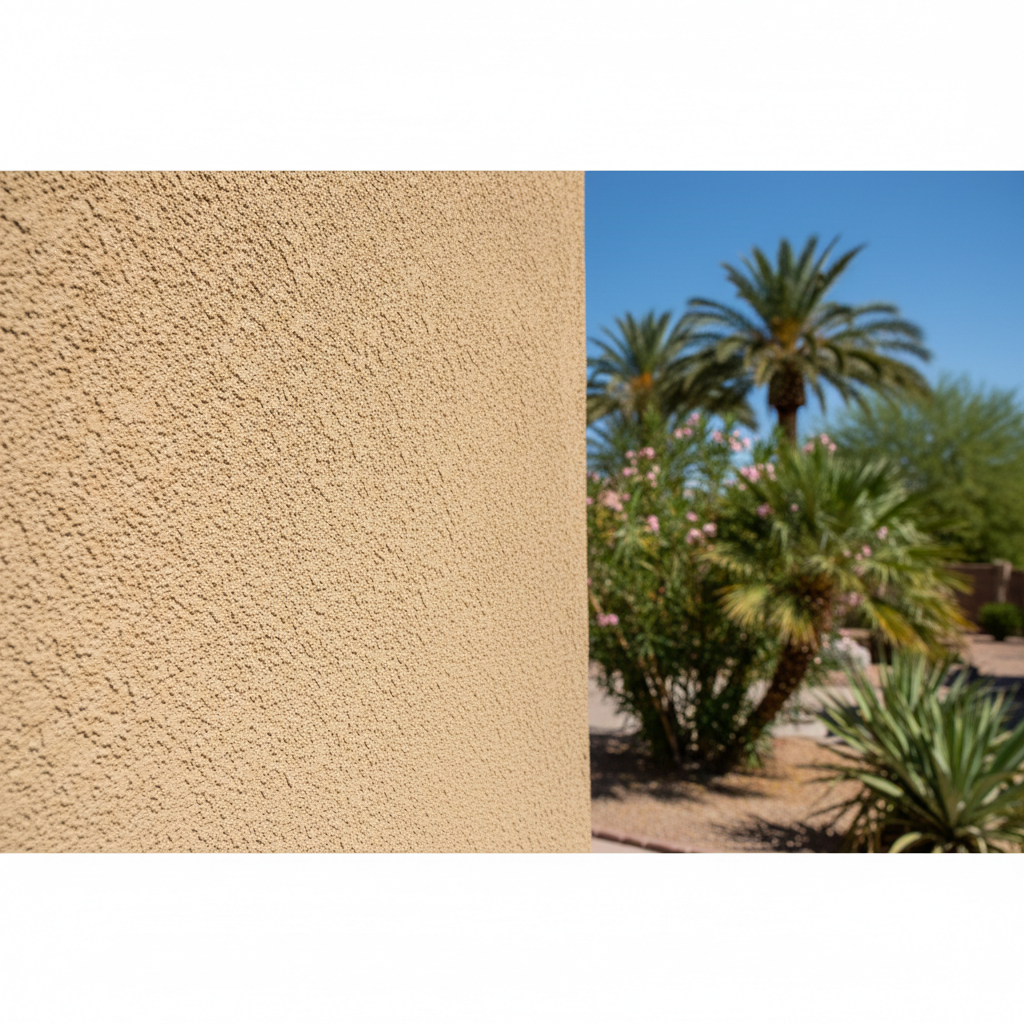
Alright, let's talk stucco painting. I get a lot of calls and questions from folks all over Las Vegas, from Summerlin to Henderson, wondering about this. It's a big investment, and you want to make sure you're doing it right. So, I figured I'd put together some straight answers to the questions I hear most often. No fluff, just what you need to know.
How often should I paint my stucco house in Las Vegas?
This is probably the number one question, and it's a good one. Here in Vegas, with our intense sun and those crazy dust storms, your paint takes a beating. Generally, you're looking at needing a fresh coat every 7 to 10 years. Now, that's not a hard and fast rule. If you used a really high-quality elastomeric paint last time, you might get a bit longer out of it. If you went with something cheaper, or your house faces west and gets hammered by the afternoon sun, you might be on the shorter end of that spectrum. Keep an eye out for fading, chalking (where you can wipe off a powdery residue), or any cracking. Those are your signs.
What's the best type of paint for stucco in our desert climate?
Hands down, you want to use an elastomeric paint. Don't let anyone try to sell you on regular acrylic latex for stucco here. It just won't hold up. Elastomeric paint is thicker, more flexible, and it forms a protective membrane over your stucco. That flexibility is key because stucco can develop hairline cracks over time, especially with our temperature swings. Elastomeric paint stretches and bridges those tiny cracks, keeping moisture out. It's also incredibly resistant to UV rays, which is a must with our 300+ days of sunshine a year. It's more expensive upfront, but it'll save you money and headaches in the long run.
Do I need to power wash my stucco before painting?
Absolutely, yes. You wouldn't paint over a dirty wall inside your house, right? Same goes for stucco, but even more so. Our desert environment means a lot of dust, dirt, and sometimes even a bit of algae or mildew in shadier spots. Power washing gets rid of all that loose debris, ensuring your new paint has a clean, solid surface to adhere to. If you skip this step, your paint won't bond properly, and you'll see peeling and flaking way sooner than you should. Just be careful not to use too high a pressure, especially on older stucco, or you can damage it. A good, professional power wash with the right nozzle and technique is crucial.
What about patching cracks or damage before painting?
This is non-negotiable. Painting over cracks is like putting a band-aid on a broken bone – it doesn't fix the underlying problem. Any cracks, holes, or spalling (where the stucco is crumbling) need to be properly repaired before a single drop of paint goes on. For hairline cracks, a good elastomeric patching compound works well. For bigger cracks or actual damage, we're talking about proper stucco repair with a patching mix that matches the existing texture as closely as possible. If you don't fix these issues, water can get in behind the paint, causing bigger problems down the road. Aim High Stucco Solutions always makes sure the surface is sound before we even think about priming.
Can I paint stucco myself, or should I hire a professional?
Look, I'm not going to tell you it's impossible to paint stucco yourself. But I will tell you it's a huge job, especially here in Vegas. You've got to deal with the heat, the sheer size of most homes, and the specialized materials. Getting a uniform finish on textured stucco takes skill, and applying elastomeric paint correctly isn't like rolling paint on drywall. Plus, there's all the prep work: cleaning, patching, masking, and making sure you're using the right primer. If you're not experienced, you could end up with an uneven finish, missed spots, or paint that starts failing prematurely. For a job this big, and with our climate, hiring a professional who knows stucco and our local conditions is usually the smarter move. It saves you time, backache, and ensures the job gets done right the first time.
Does the color of the paint matter for energy efficiency in Vegas?
Yes, it absolutely does. This is a big one for us in the desert. Lighter colors reflect more sunlight and absorb less heat. That means a lighter-colored house will naturally stay cooler than a dark-colored one, which can translate to lower air conditioning bills during our brutal summers. Think about it: you wouldn't wear a black shirt outside in July, right? Same principle for your house. While dark colors can look sharp, they're going to make your AC work a lot harder. Many homeowners here opt for shades of tan, beige, light gray, or even white for their stucco to help keep things cooler. It's not just about aesthetics; it's about practical energy savings.
What's the best time of year to paint stucco in Las Vegas?
You've got to pick your timing carefully here. You don't want to paint when it's too hot, too cold, or too windy. Our summers are a definite no-go for exterior painting; the paint dries too fast, doesn't cure properly, and you'll get brush marks or uneven finishes. Winter can work, but you need to watch out for those colder nights when temperatures dip below the paint manufacturer's recommendations. Spring and fall are generally your best bets. The temperatures are more moderate, and you avoid the extreme heat and the occasional strong winds we get. We usually aim for days where the temperature is consistently between 50 and 85 degrees Fahrenheit. That gives the paint the best chance to bond and cure correctly.
How long does stucco painting usually take?
This really depends on the size of your house and the condition of the stucco. For an average 2,000-3,000 square foot single-story home, you're usually looking at anywhere from 3 to 7 days. That includes all the prep work – power washing, patching, masking – and then the priming and two coats of elastomeric paint. If there's a lot of repair work needed, or if it's a larger, multi-story home with intricate architectural details, it could take longer. A good contractor will give you a clear timeline upfront, but always factor in a little wiggle room for unexpected issues or weather changes, even in sunny Vegas.
Hopefully, this clears up some of those nagging questions you've had about painting your stucco. It's a big job, but with the right approach and the right materials, your house will look great and be protected for years to come.